
Store Prices
Dive into the underlying pricing data at the most granular level, monitor the roll out of promotions and price changes in your category at the store level. Use this data to build sophisticated pricing strategies at a an unmatched level of granularity.
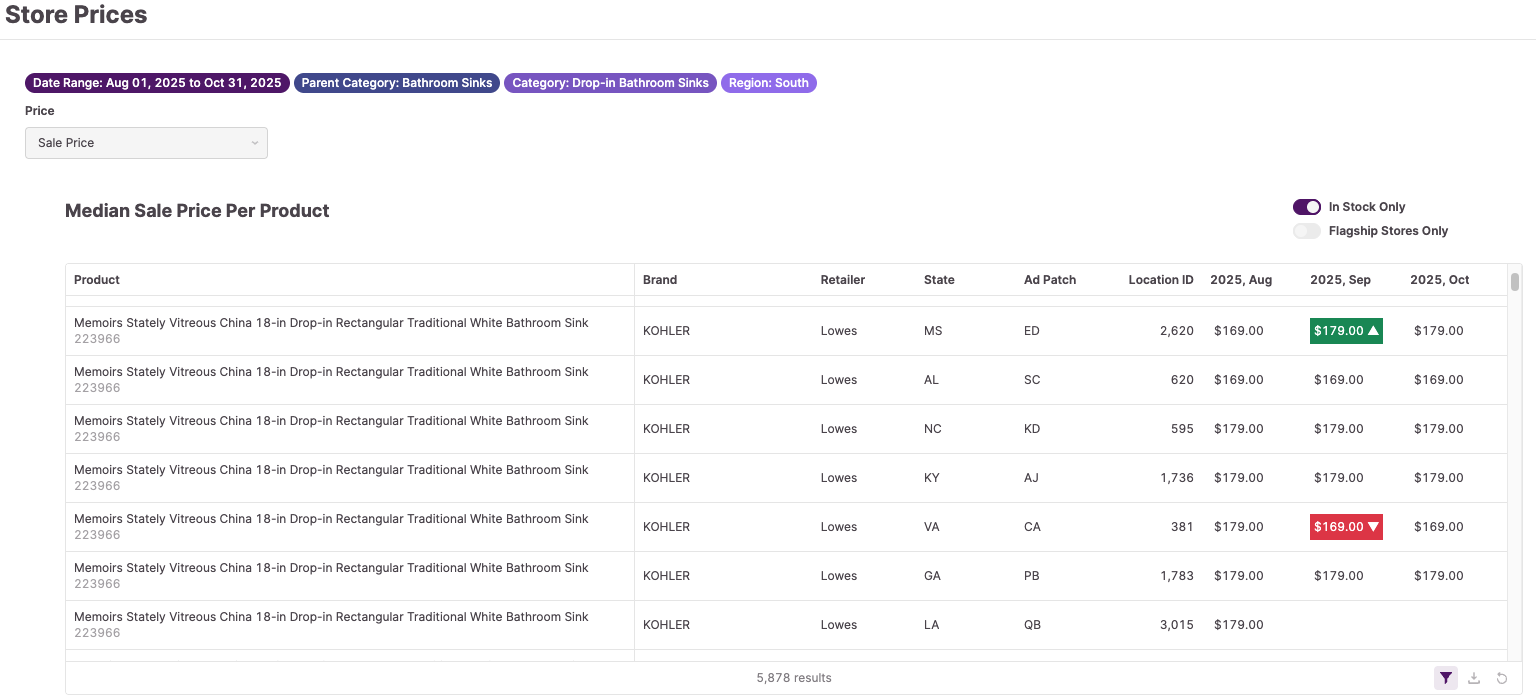
Store Prices Basics
How to Read
Filter for a specific pricing zone (e.g., ad patches in Lowe's) and look at prices across locations to make sure your SKUs are priced appropriately and that your pricing is set as expected vs. your key competitive SKUs in surrounding stores.
How to Use
Keep your house clean with your merchant. If your prices are not aligned within your price zones or if competing SKUs are changing prices that should be matched, you can influence your retailer to stay real time with pricing trends. Give specific examples from your prior analysis in how price trends are driving competitive advantages for others in the market and implement price changes in the correct geographic areas.
Key Metrics
Sale Price
The median sale price (including promotions) of a given item, calculated across a month of sales.
Base Price
The median sale price (excluding promotions) of a given item, calculated across a month of sales.
Ad Patch
Retailer specific groupings of individual stores (Location IDs). Lowes calls these "Ad Patches", Home Depot calls them "markets". In theory, pricing strategy is consistent across all stores within the same Ad Patch.